Flagship products

Built in the open, run in production.

Each one started as a problem we had ourselves. Each one ships with tests, CI, a security policy and documentation, because that is the standard we sell.

01 MCP server MIT Open source

mcp-unifi

Run a UniFi network in plain English, with guardrails an assistant cannot talk its way past.

A safety-first MCP server that lets Claude, or any MCP client, manage a self-hosted UniFi network: VLANs, firewall rules, WiFi and switch ports. Opt-in modules add Protect for cameras and read-only Access for doors. The rules live in the server, not the prompt. Every destructive call can be previewed with a dry run, multi-step changes roll back on partial failure, and every call lands in an audit log with secrets scrubbed.

  • 100+ tools across UniFi Network, Protect and Access
  • Dry-run previews, composite rollback, JSONL audit log
  • Read-only mode, multi-site, cosign-signed images with an SBOM
  • Docker, Helm, Claude Desktop bundle, and the official MCP Registry
02 Agent protocol Apache 2.0 Draft spec v0.1

Writ Protocol

Hand an AI agent a limited slice of your authority, and get back a signed record of what it did with it.

Writ lets one agent delegate a narrower piece of its authority to another, which can narrow it again, and brings back a signed receipt from every hop. Anyone can check the chain offline without asking a server. It answers the questions agent protocols leave open: can the limit be trusted, what actually happened, and can it be undone.

  • Draft specification plus Go and Python implementations that check each other
  • 288 conformance vectors and 25 multi-step scenarios
  • writ-hook puts a Claude Code session under a signed grant
  • Apache 2.0, built for an outside implementer to break
03 Evaluation app MIT Open source

Open Model Arena

Find out how the model on your own hardware compares to the API you pay for, on your own prompts.

Two models get the same prompt. You read both answers without knowing which wrote which, then vote. An ELO leaderboard tracks the results, and per-response cost tracking shows what each answer cost. It connects to any OpenAI-compatible endpoint, local or cloud, and runs as one container with one YAML file.

  • Blind battles with live streaming and an ELO leaderboard
  • Per-response cost tracking, categories and a vote audit log
  • Audience vote: a room full of phones picks the winner
  • Ollama, vLLM, LM Studio, gateways and cloud APIs side by side
04 Game engine MIT Live on two sites

Open Setlist Stash

A prediction game that reads any band’s setlist data over MCP. Two live communities, one image, zero forks.

The game engine holds no setlist data of its own. Every read goes out over the Model Context Protocol to a server you point it at, so the same container runs Tweezer Picks for Phish fans and Wappy Picks for Umphrey’s McGee fans. Only the environment config and branding differ.

  • Runs tweezerpicks.com and wappypicks.com from one published image
  • Data arrives over MCP, so a new band needs a data source, not a fork
  • FastAPI and Postgres, mypy-strict, Trivy-scanned
  • Self-hostable for any music community
Showcase

DewFront. A weather app that makes the decision for you.

Most weather apps hand you a table and leave the thinking to you. DewFront leads with dew point, the reading that actually tells you how the air will feel. It weighs dew point against temperature, rain chance and wind to give one verdict on whether to open the windows tonight, and names the best two hour window today for getting outside.

The overnight rule, live

Should the windows be open tonight?

40° 50° 60° 70° 80° 8PM10PM12AM2AM4AM6AM8AM dew point limit 60° inside target 70° cold floor 50° temperature dew point
8 PM open
  • Dew point 60°F or below
  • Cooler outside than the 70°F target
  • At or above the 50°F cold floor
  • Rain chance under 35%
  • Wind under 20 mph
Verdict

Open until 6 AM

At 6 AM it drops to 49°F, under the 50°F cold floor.

Four made-up nights, run through the rule as the case study documents it: an hour is open only when all five conditions hold, and the verdict comes from the longest unbroken run. The app itself goes further, from shoulder seasons to dry winter air.

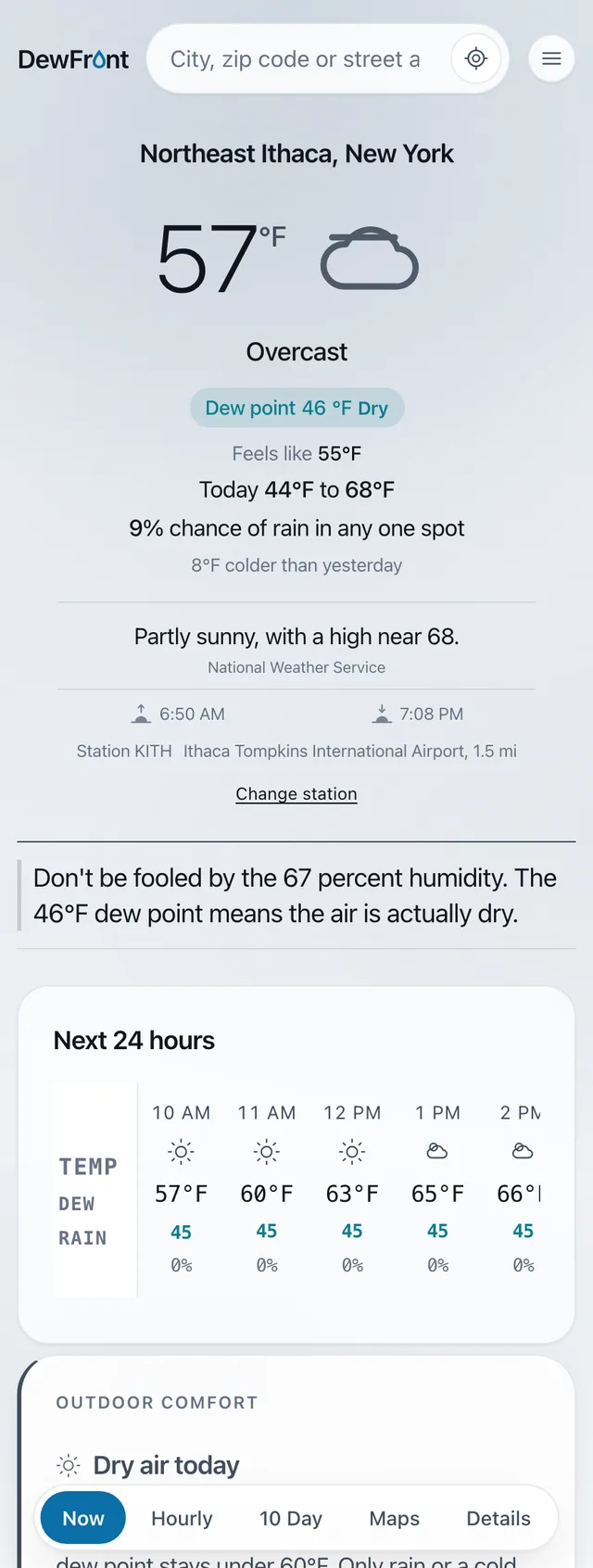
DewFront on a phone: the Now screen leads with the temperature, the dew point and its comfort word, then a plain sentence about how the air will feel
The Now screen on a phone
  1. 01

    Every reading says where it came from.

    Each field takes the best fresh source: your own weather station, then the nearest National Weather Service station, then a forecast model. Measured readings are marked, and a reading that has aged out is shown struck through rather than hidden.

  2. 02

    It shows its own doubt.

    Three independent global models sit side by side for the next three days, and the app says whether they agree. One confident number would hide something you would want to know.

  3. 03

    One rule, used everywhere.

    The server and the browser run the same decision functions, compiled into both, with the clock passed in. There is no copied threshold to drift, and any night can be replayed in a test.

  4. 04

    Tests that prove what is missing.

    The tests worth pointing at assert absence: relative humidity never appears on the windows card, and switching to Celsius leaves no Fahrenheit anywhere on the screen.

2,501
unit tests
97.55%
statement coverage
91.31%
branch coverage
55
end-to-end tests

Test figures from the public case study, measured 2026-09-19. The production source is private; the case study covers what it does, how it is built, and the decisions behind it, including the ones that were wrong first.

Showcase

All Terrain Society. A riding crew’s record, mapped by an agent.

All Terrain Society puts a riding crew’s trips and spots on a live map, with each ride’s route drawn underneath and a GPX file to download. An agent pipeline publishes it from strava-mcp-vault, our open source MCP server for Strava, and nothing ships until the site’s checks pass.

From Strava to the map every refresh, in this order
  1. 01 Strava Where rides are recorded
    • 100 requests per 15 min
    • 1,000 a day
  2. 02 strava-mcp-vault Our open source MCP server
    • SQLite cache, API only on a miss
    • tokens renewed before they expire
  3. 03 Sync agent Pulls the new rides
    • rebuilds spots, photos, GPX
    • new places wait for a name
  4. 04 Gates Checks before anything ships
    • privacy test
    • a real browser sees the map draw
  5. 05 Review Stops for a person
    • nothing deploys unseen
  6. 06 allterrainsociety.com Live
    • deploys, then rechecks the live map
One ride, as the map shows it GPX ↓
Fall Mountain Bike Ride Shindagin Hollow · Sep 30, 2026 · 7.1 mi · 699 ft climbing
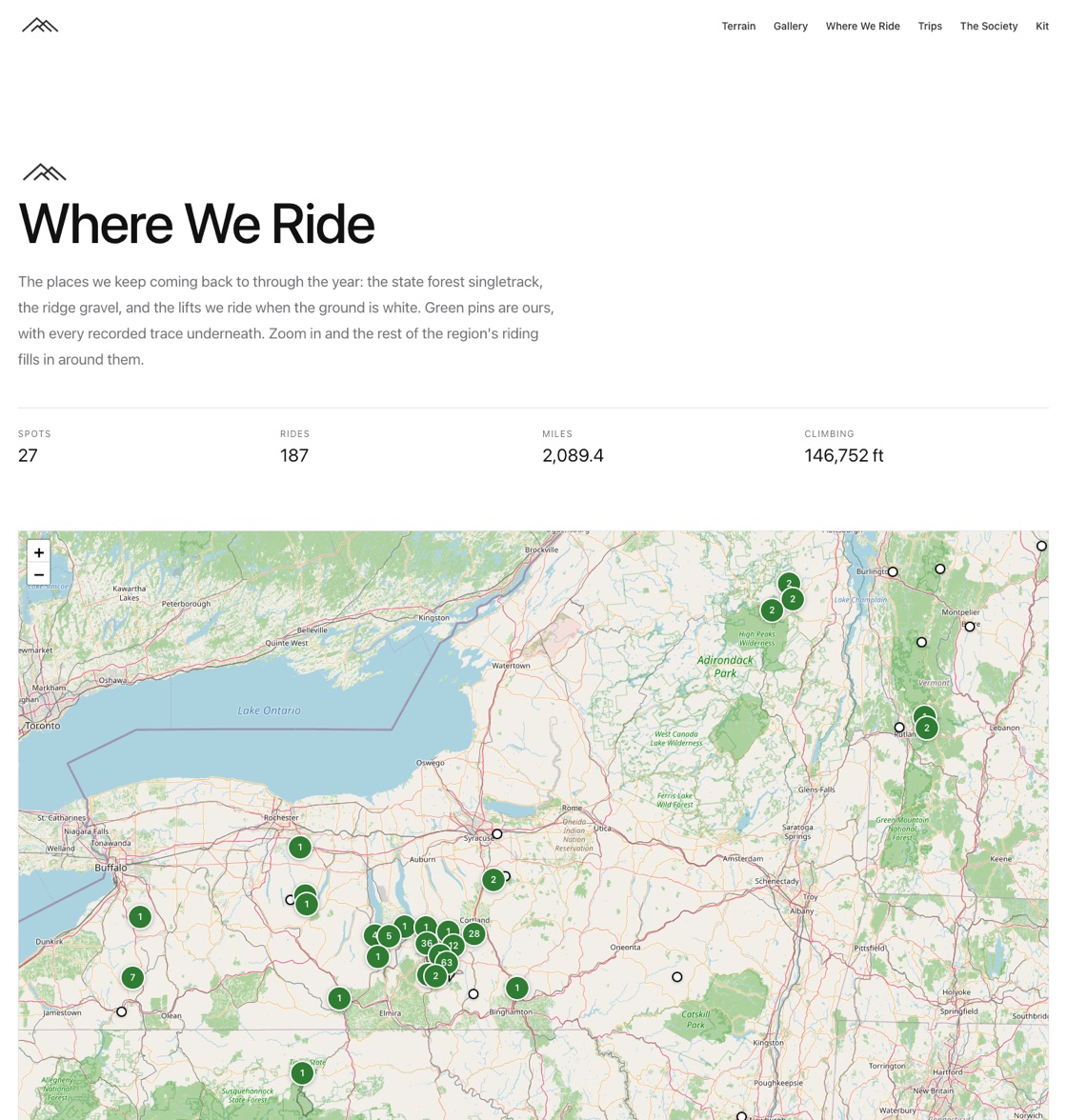
All Terrain Society's Where We Ride page on desktop: totals for spots, rides, miles and climbing above a map of New York and Vermont, with green pins numbered by the rides at each spot
Where We Ride · every spot, pinned by hand
Three promises the server keeps

Each one is pinned by a test that fails if the promise is removed.

  1. 01

    Only public rides.

    A ride is published only when Strava marks it visible to everyone. A missing or unknown setting is withheld, so a change on Strava’s side fails closed.

  2. 02

    Nothing named by a machine.

    A spot appears only after someone names it. Unnamed rides are counted, never placed: auto-naming would have put a neighborhood with 59 ride starts on the map first and largest.

  3. 03

    No start points, ever.

    The export never emits a recorded start coordinate. Only route lines go out, and a spot’s pin is the coordinate a person chose.

187
rides on the live map
27
riding spots
10
GitHub stars, all outside
5
forks, all outside

Ride counts read from the live site on 2026-10-04, stars and forks from GitHub, every one of them from someone else's account. strava-mcp-vault is MIT licensed, and an outside contributor has had two pull requests merged. It is the same shape as our Read-only MCP connector package.

Open source

The tools behind the tools.

MCP servers, a shared library, playbooks, tools and incident write-ups. If we use it to run client work, there is a good chance you can read it.

Web work · since 2009

Where it started.

Sites we have built, hosted or maintained for festivals, artists and businesses across New York and beyond. We still build, host and look after websites, on their own or as part of a bigger project, to the same standards as everything above. See the tiers and prices.

Clients we have worked with
Finger Lakes GrassRoots Festival logo
The Mill logo
Ithaca Reggae Fest logo
John Brown's Body logo
Giant Panda Guerilla Dub Squad logo
Great Blue Heron Music Festival logo
Kevin Kinsella logo
Shakori Hills Community Arts Center logo
  1. 01 The 53 Report Our publication An NFL analytics publication answering how many draft picks actually stick. Built on a drafts database we maintain, written and fact-checked through an editorial pipeline we built ourselves. the53report.com The 53 Report website screenshot
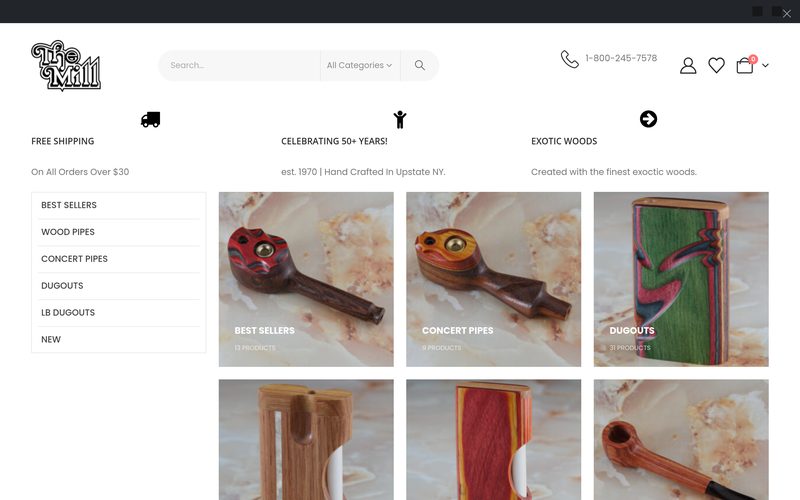
  2. 02 The Mill E-commerce + hosting Full e-commerce store for a handcrafted wood pipes and accessories shop. Product catalog, secure checkout, inventory management, and ongoing hosting since 2011, now on our own server. gotothemill.com The Mill website screenshot
  3. 03 Finger Lakes GrassRoots Updates + maintenance Ongoing front-end updates and maintenance for the Finger Lakes GrassRoots Festival of Music and Dance, one of the largest independent music festivals in the Northeast. grassrootsfest.org Finger Lakes GrassRoots website screenshot
  4. 04 Ithaca Reggae Fest Design + development Website design and front-end development for the annual Ithaca Reggae Fest: lineup announcements, ticket integration and event promotion. ithacareggaefest.com Ithaca Reggae Fest website screenshot
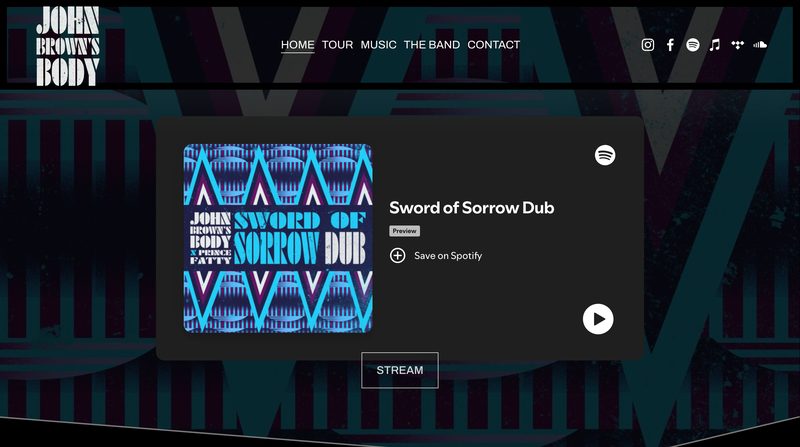
  5. 05 John Brown's Body Design + development Official website for John Brown's Body, a pioneering dub and reggae band out of Ithaca, NY. Tour dates, music catalog, merchandise and band news. johnbrownsbodymusic.com John Brown's Body website screenshot
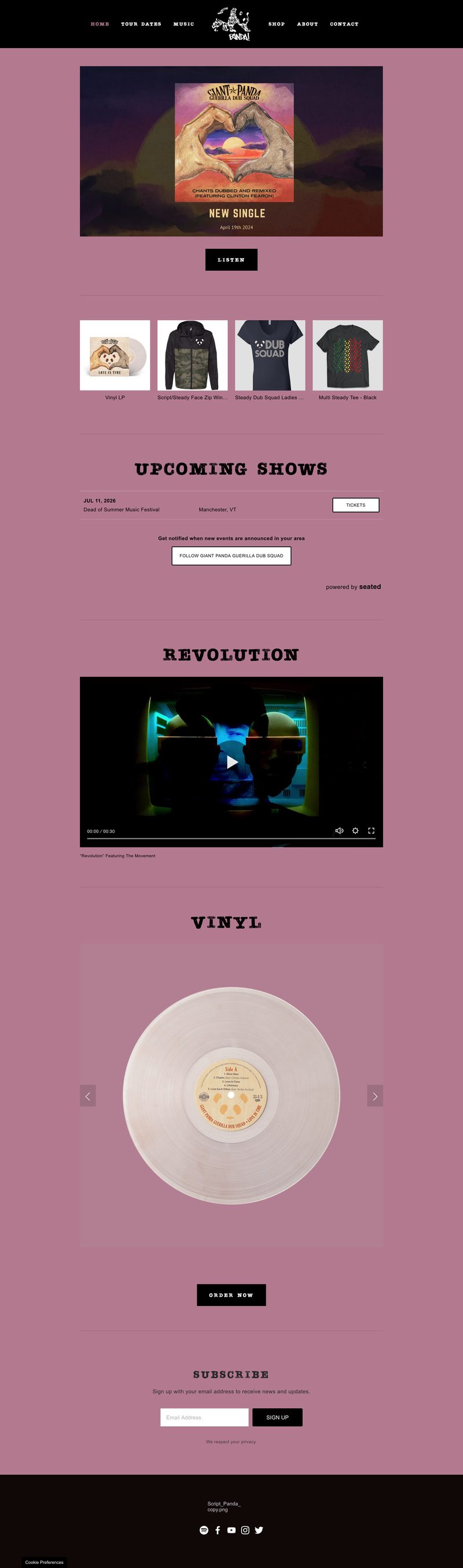
  6. 06 Giant Panda Guerilla Dub Squad Design + development Website for one of Ithaca's best-known bands, and our first real client. Merch store, tour dates, music releases and video. livepanda.com Giant Panda Guerilla Dub Squad website screenshot
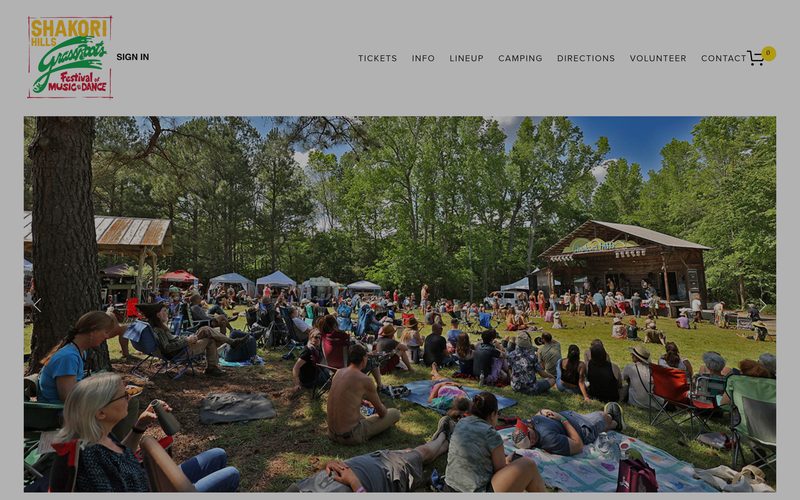
  7. 07 Shakori Hills GrassRoots Design + development Website design and ongoing updates for the Shakori Hills GrassRoots Festival in North Carolina, maintained through each festival season. shakorihillsgrassroots.org Shakori Hills GrassRoots website screenshot
See services

Have a system you want an agent to check?

No sales pitch and no discovery call that is really a sales call. A straight answer about what we can build, how we would keep it safe, and what it costs, quoted in writing.